Activating the Conspiracist Archive
Tracing, Layering, and Speculative Association
DOI:
https://doi.org/10.37522/txz4kb65Keywords:
conspiracy theories, drawing, memes, overlay, mappingAbstract
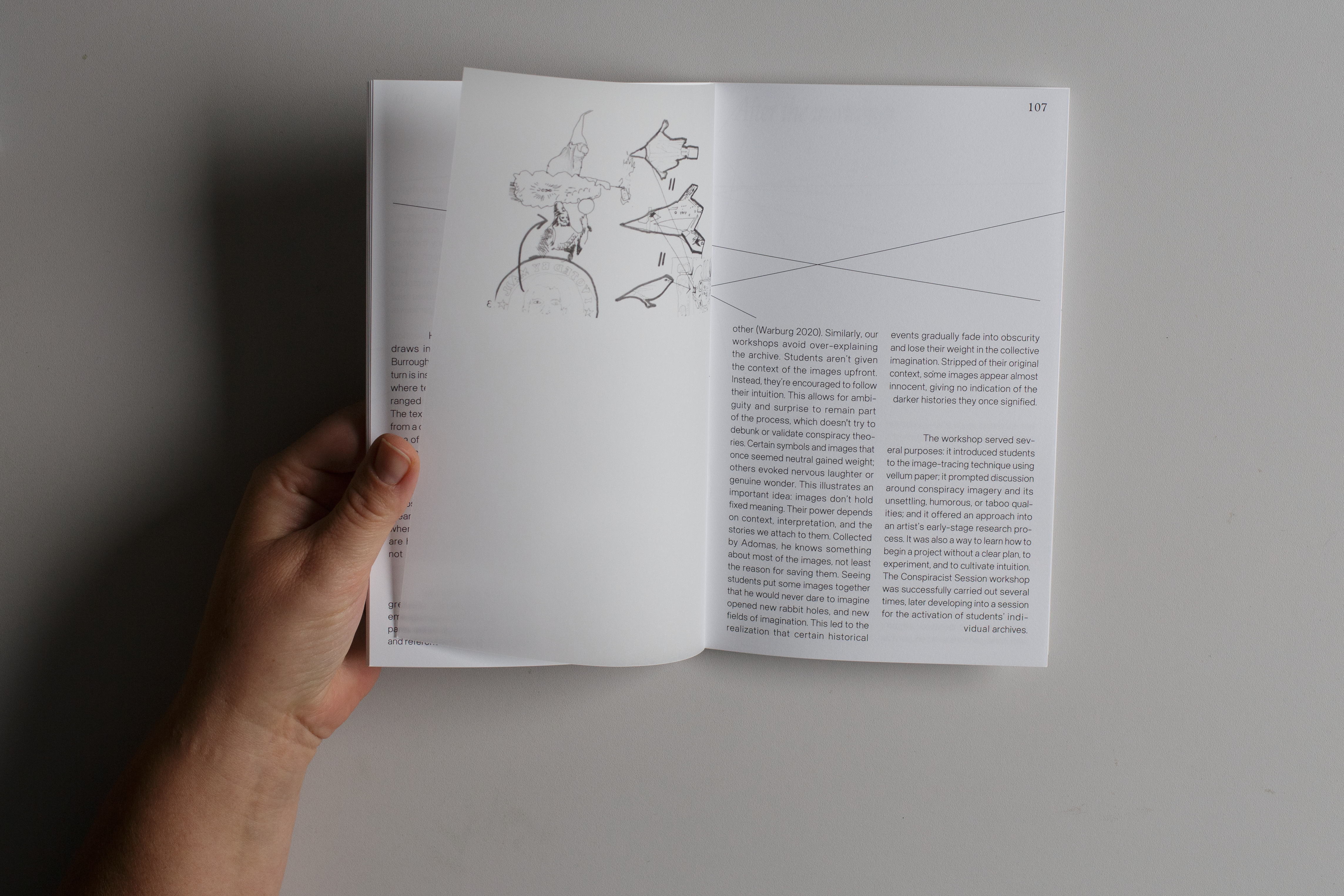
The text describes the “Conspiracist Session”, a workshop method developed by the artists Adomas Žudys and Indrė Liškauskaitė that uses tracing, layering, and rearranging archival images to generate intuitive artistic research processes. Adomas’ archive consists of thousands of printed digital images related to conspiracy aesthetics, memes, politics, symbols, and internet culture, collected as a way to preserve and reinterpret unstable
online media. In the workshops, students trace overlapping images onto transparent vellum paper, creating unexpected visual and conceptual associations that encourage speculation, intuition, and non-linear thinking. The method draws on theories by Richard Hofstadter, Eve Kosofsky Sedgwick, Fredric Jameson, and Aby Warburg, framing conspiracy aesthetics as a way to map hidden systems, generate meaning, and activate imagination rather than promote conspiracy beliefs. After the workshops, students began using their own phone galleries and digital archives as source material, revealing recurring themes such as cats, bodies, and digital culture while turning personal image collections into starting points for new artistic projects.